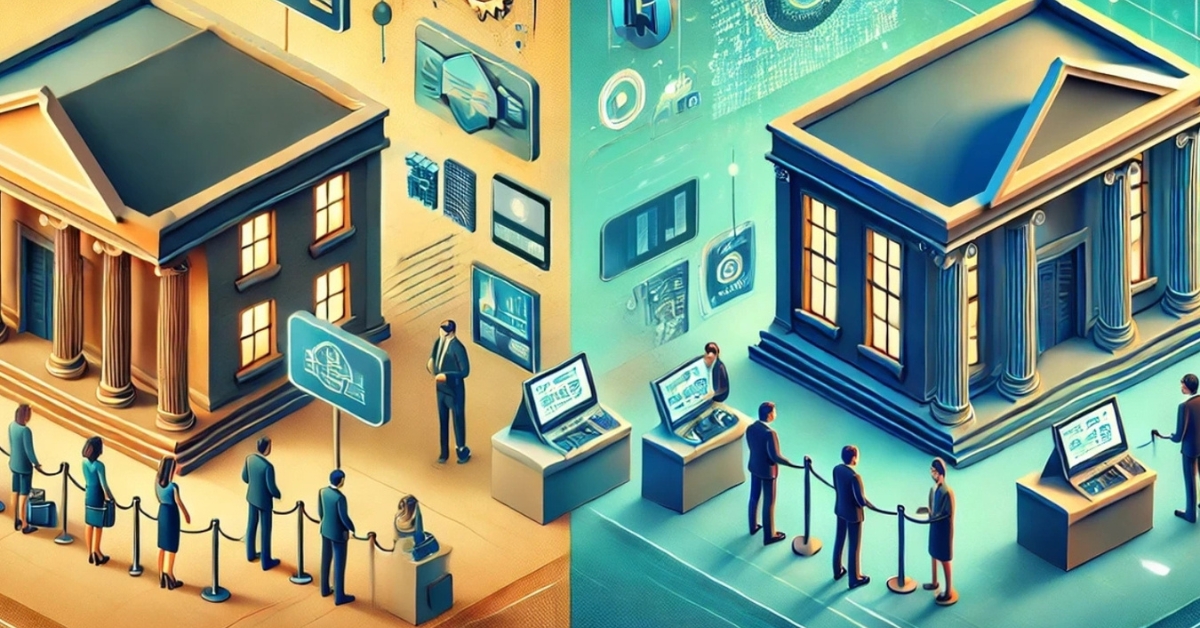
The way we handle money is changing faster than ever. On one side, you’ve got sleek apps, instant payments, and AI-powered tools called fintech. On the other, you have the classic, familiar institutions we all grew up with – traditional banks.
So in the battle of fintech vs traditional banks, who’s winning? And more importantly, which one should you trust with your money?
Understanding the Basics
What Is Fintech?
Fintech (short for financial technology) is any technology-driven solution that helps people or businesses manage, send, invest, or borrow money digitally.
Think of:
- Mobile banking apps
- Digital wallets like PayPal, Cash App, or Apple Pay
- Investment apps that let you buy stocks with a few taps
- Online lending platforms that approve loans in minutes
Fintech is basically the “startup version” of finance – fast, digital, and often laser-focused on solving specific pain points.
Why This Comparison Matters Today
Why is fintech vs traditional banks even a big debate now?
Because:
- People are tired of waiting in lines and dealing with paperwork.
- Smartphones have made money movement insanely easy.
- Younger generations expect everything to be fast, digital, and available 24/7.
So the real question becomes: Do you want speed and innovation, or stability and tradition? Or maybe a mix of both.
Key Differences Between Fintech and Traditional Banks
Technology and Innovation
- Fintech:
Born in the digital age. Uses cutting-edge tech like AI, big data, machine learning, and automation.- Fast product updates
- Often experiments with new features
- Highly optimized apps and interfaces
- Traditional Banks:
Many still rely on legacy systems built decades ago. They’re upgrading, but slowly.- Less flexible with changes
- Technology improvements can take years
- Innovation is careful and gradual
Speed and Convenience
- Opening a fintech account?
- Often done in minutes, fully online, with e-KYC and digital identity checks.
- Opening a traditional bank account?
- Might need in-person visits, signed documents, and waiting for approval.
Fintech shines when it comes to instant actions: quick transfers, instant notifications, and real-time account views.
Cost Structure and Fees
Fintech companies usually have:
- No physical branches
- Lower operational costs
- Fewer employees per customer
This often means:
- Lower or zero account maintenance fees
- Cheaper international transfers
- Better currency conversion rates
Traditional banks, with branches and large staff, often pass those costs onto customers through:
- Maintenance fees
- ATM withdrawal fees
- Hidden charges and bigger spreads on exchange rates
User Experience and Personalization
- Fintech apps are usually:
- Clean, modern, and easy to use
- Designed around you and your phone
- Built with personalization in mind (spending insights, budgets, alerts)
- Traditional bank interfaces:
- Can feel clunky or outdated
- Not always optimized for mobile
- Sometimes confusing, especially for younger or digital-first users
How Fintech Companies Operate
Digital-First and Mobile-First Approach
Fintech companies don’t usually start by opening branches. They start by launching an app or a website.
- All services are built around the smartphone.
- Paperwork is replaced by digital forms and e-signatures.
- Verification is automated as much as possible.
You’re not “going to the bank” anymore. The bank is in your pocket.
Use of AI, Data, and Automation
Fintech platforms rely heavily on data and automation:
- AI chatbots answer basic queries instantly.
- Algorithms analyze your spending and suggest budgets.
- Credit scoring can be based on more than just your salary or old credit history.
This allows them to serve more people, often faster and at scale.
Popular Types of Fintech Services
Digital Payments and Wallets
These allow:
- Instant money transfers
- QR code payments
- Online shopping without entering card details every time
They’re all about making payments smoother and faster.
Online Lending Platforms
Fintech lenders can:
- Pre-approve you based on alternative data
- Disburse loans quickly
- Provide microloans to people traditional banks may reject
They’re changing how people and small businesses access credit.
Robo-Advisors and Investment Apps
These tools make investing:
- Low-cost
- Automated
- Accessible to beginners
Instead of meeting a financial advisor at a bank, you answer a few questions and an algorithm builds you a portfolio.
Neobanks and Challenger Banks
These are digital-only banks:
- No branches
- Fully app-based
- Often have lower fees and cooler interfaces
They usually target younger, tech-savvy customers or specific niches.
How Traditional Banks Operate
Branch-Based and Legacy Systems
Traditional banks built their empires around:
- Physical branches
- In-person relationships
- Paper-based processes
Over decades, they’ve layered new systems over old ones, which can make changes complex and slow.
Regulatory Framework and Stability
One major strength of banks:
- Heavily regulated by governments and central banks
- Often part of deposit insurance schemes
- Seen as “too big to fail” in many countries
This creates a feeling of safety and stability, especially for large deposits and long-term savings
Range of Services Under One Roof
Traditional banks usually offer:
- Savings and current accounts
- Loans, overdrafts, and credit cards
- Mortgages and car loans
- Trade finance, treasury, wealth management
They’re like financial supermarkets – everything in one place.
Trust, Brand Value, and History
For many people:
- A bank that has existed for 50+ years = trustworthy
- They’ve seen the brand in ads, branches, cards, and ATMs for decades
This emotional trust is something many fintech startups are still trying to build.
Pros and Cons of Fintech
Advantages of Fintech
- Speed: Open accounts, get cards, and transfer money quickly
- Convenience: Anywhere, anytime access
- Lower Fees: Less overhead often means fewer or lower fees
- Innovation: New features and updates roll out frequently
- Better UX: Clean, user-friendly interfaces
Disadvantages and Risks of Fintech
- Newer Players: Some fintechs are startups that may not survive long-term
- Limited Services: Many focus on one niche only
- Regulation Gaps: In some regions, fintech is less regulated than banks
- Support Issues: Customer service may be chat-only or slower at peak times
- Dependence on Tech: Outages or bugs can lock you out temporarily
Pros and Cons of Traditional Banks
Advantages of Traditional Banks
- Stability and Regulation: Heavily supervised, often insured
- Wide Service Range: From savings to complex business solutions
- Human Interaction: You can talk to a real person in a branch
- Physical Presence: Useful for cash-based customers or older generations
Disadvantages and Limitations of Traditional Banks
- Higher Fees: Administrative and branch costs add up
- Slower Processes: Loan approvals or account changes can take time
- Less Innovation: Changes are cautious and gradual
- Inconvenience: Need to visit branches for certain services
Security, Regulation, and Trust
How Safe Is Fintech?
Many fintechs:
- Follow strict security standards
- Use encryption, 2FA, biometrics, and fraud detection
- Partner with licensed banks to hold funds
However:
- Some operate in gray regulatory areas depending on the country
- Not all offer deposit insurance directly
- Users must research regulatory status before trusting large sums
How Safe Are Traditional Banks?
Traditional banks:
- Are tightly regulated
- May offer insured deposits up to a certain amount
- Have risk management departments and compliance teams
They are generally considered safer for large, long-term deposits, especially in stable banking systems.
Data Privacy and Cybersecurity Concerns
Both fintechs and banks face:
- Hacking attempts
- Phishing scams
- Fraud risks
The difference is:
- Fintechs often innovate faster in security tech.
- Banks have more layers of risk management and long-standing security infrastructure.
In all cases, your behavior matters: strong passwords, avoiding suspicious links, and enabling two-factor authentication are essential.
Customer Experience – Who Serves You Better?
Account Opening and Onboarding
- Fintech: Usually fully digital, fast, and painless.
- Banks: Might need paperwork, physical presence, or several days of verification.
Customer Support and Problem Resolution
- Fintech:
- Often uses chatbots and email support
- May lack 24/7 human support in smaller companies
- Banks:
- Call centers, email, and branches
- But lines may be long and processes slow
Personalization and Financial Education
Fintech apps often:
- Show spending categories
- Give nudges to save
- Provide charts, insights, and reminders
Banks are starting to copy these features but fintech still leads in making money management feel like using a modern app, not a spreadsheet.
Business Perspective – Fintech vs Banks for Businesses
Payment Processing and Cash Flow
Businesses today use:
- Fintech payment processors for:
- Online checkout
- Subscription billing
- Instant payouts
These are flexible and integrate with websites, apps, and e-commerce platforms.
Banks, on the other hand:
- Provide merchant accounts, POS machines, and standard transfers.
- Good for established businesses, but may be slower or less flexible.
Business Loans and Credit
- Traditional banks:
- Offer structured business loans
- Require more documentation and checks
- Provide larger loan amounts
- Fintech lenders:
- Provide quicker decisions
- Sometimes use alternative data (sales, invoices, etc.)
- Suitable for smaller, fast-growing businesses
Tools, Integrations, and Automation
Fintech tools can:
- Integrate with accounting software
- Automate invoicing, reminders, and reconciliation
- Provide dashboards and analytics
For small businesses and freelancers, fintech can feel like a financial assistant in app form.
Collaboration, Not Just Competition
How Banks Are Partnering with Fintechs
The real story isn’t just “fintech vs traditional banks.” It’s increasingly:
Fintech + Banks
Banks:
- Partner with fintechs to offer better digital experiences
- White-label fintech services
- Invest in fintech startups
Fintechs:
- Use banks’ licenses and infrastructure
- Leverage bank accounts to hold customer funds
- Gain trust by associating with well-known institutions
Open Banking and APIs
Open banking allows you, as a customer, to:
- Share your banking data securely with fintech apps
- See all your accounts in one dashboard
- Get tailored recommendations based on your real financial behavior
This is blurring the line between banks and fintechs even more.
What This Means for You as a Customer
You get:
- More choices
- Better experiences
- Often lower costs
Instead of being stuck with one old-school bank app, you can build your own “financial stack” using both banks and fintech tools.
Which Is Better for You?
When Fintech Makes More Sense
Fintech is great if you:
- Want fast, mobile-first banking
- Hate paperwork and branch visits
- Care about fees and want cheaper options
- Enjoy modern, user-friendly apps
- Need flexible tools for side hustles, freelancing, or online business
When Traditional Banks Are the Better Choice
Traditional banks may be better if you:
- Hold large amounts of savings
- Need complex products like mortgages, business lines of credit, trade finance, etc.
- Prefer in-person advice and relationships
- Live in a region where fintech regulation is weak or unclear
Using Both Together Smartly
Here’s a powerful approach:
- Use fintech for:
- Daily spending
- Budgeting
- International transfers
- Online business tools
- Use traditional banks for:
- Long-term savings
- Major loans (home, car)
- Business banking at scale
You don’t have to choose sides. You can combine the strengths of both.
Future of Finance – What’s Coming Next?
Trends Shaping Fintech
- More AI-driven financial coaching
- Smarter fraud detection
- Embedded finance inside non-financial apps (like ride-sharing apps offering wallets)
- Crypto and blockchain-based solutions in some markets
Fintech will keep pushing the boundaries of what’s possible.
How Traditional Banks Are Evolving
Banks aren’t just sitting still:
- Upgrading apps and online banking
- Closing some branches and focusing more on digital
- Building their own fintech-style solutions
- Collaborating more with tech companies
The Likely Hybrid Model
The future probably isn’t “fintech wins, banks die” or vice versa.
More likely:
- Banks become more digital and agile.
- Fintechs become more regulated and stable.
- Customers get a hybrid ecosystem where money flows seamlessly between apps and banks.
Conclusion – Fintech vs Traditional Banks: The Real Winner
In the debate of fintech vs traditional banks, there isn’t a single, universal winner.
- Fintech wins on: speed, convenience, innovation, and user experience.
- Traditional banks win on: stability, regulation, and breadth of services.
The real winner is you, if you learn how to use both wisely.
Think of fintech as your smartphone assistant for money and traditional banks as your strong financial backbone. When you combine the two, you get a powerful, flexible, and secure way to manage your finances in the modern world.
FAQs About Fintech vs Traditional Banks
1. Is fintech safer than traditional banks?
Not always. Many fintechs use advanced security technology and partner with regulated banks, but they may not always offer the same level of deposit insurance or regulatory protection. Traditional banks are usually more tightly regulated and may be safer for large, long-term deposits. The key is to check the regulatory status and licenses of any fintech you use.
2. Can fintech replace my traditional bank completely?
For some people, yes. If your needs are simple—like everyday payments, savings, and basic investments—a good fintech app or neobank might be enough. But if you need complex products like big loans, mortgages, or specialized business services, you may still need a traditional bank.
3. Are fintech apps free to use?
Many fintech apps are free to download and use, and often have lower fees than traditional banks. However, they may still charge for certain services, like premium features, international transfers, or card usage. Always read the fee structure before committing.
4. Can I use fintech and traditional banks at the same time?
Absolutely—and that’s often the smartest move. You can use fintech apps for daily spending, budgeting, and quick payments while keeping your main savings or long-term funds with a traditional bank. This way, you enjoy innovation without sacrificing stability.
5. How do I choose between a fintech and a traditional bank?
Ask yourself:
- Do I value speed and convenience more, or stability and reputation?
- Do I need advanced, digital tools or just basic banking?
- How important is it for me to talk to a real person?
Your answers will guide you. For most people, the best option is a mix of both: fintech for daily convenience and traditional banks for long-term security.
For more Articles Please Click Here
For more Details About this Articles Please Click Here